





Questions From Our Readers
Diane writes:
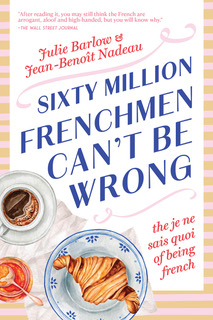
Several years ago, I had toyed around with the idea of relocating to France (or someplace in Europe). Just last week, I stumbled upon your good book “60 Million Frenchmen can’t be wrong”. Someone from one of the ‘expat’ blogs mentioned it. I’m glad that I’m reading this amazing tome. I got a little depressed after reading the chapter on WW2. Though I know that this era is important for any number of reasons, I’d no idea of how important it is to the French. Your book highlights so many things of which I had been completely clueless. Now, in light of some recent horrible events in Toulouse, France, I’m reminded about that WW2 chapter in your book.
I think that things are different in France than in the 60s or before that. Is there more anti-foreigner sentiment? I wanted to try to situate myself in Aix-en-Provence (or somewhere in the Languedoc-Rousillon area, but is Paris a better option)? How can a regular person afford Paris, France?
Julie answers:
Hello Diane,
This is really the best kind of letter an author can hope for from a reader, from someone whose ideas have changed and someone who really takes our writing to heart.
To answer your questions quickly: There’s anti-foreigner sentiment in every country, in certain segments of society. My experience living and traveling in a number of countries is that France is no different than elsewhere. We met and became friends with unbelievably generous French people who literally opened their homes to us. We also met people who didn’t like foreigners. Fortunately, the latter were much, much rarer, as they are in every country (and I lived in the U.S.).
How can an ordinary person afford France? Well, France is full of ordinary people who make ends meet. The trick is not living like a tourist, but figuring out how the French spend their money, how they save. The French are very thrifty. Sure they have a huge luxury products industry, but much of that is for export. Take your tips from the locals (so it will help if you speak French!).
My conclusion from moving around is that even if everything doesn’t work out as you dream (and it rarely does), you’ll never regret having tried…
Best of luck,

Julie


2 Comments
Well they don’t come more regular than me and I’m making it here. I have found that the answer lies in living outside Paris (I’m an hour by train). I rent a beautiful house in a small town and we live on my husband’s salary (in a fit of midlife minimalist madness I quit my job as a doctor and decided to be funemployed for a while). We watch our spending carefully and it works.
As for anti-foreigner sentiment, haven’t seen it yet. We have found people to welcome us with open arms. Now, we try to speak French, we respect their values and customs (as you know from the genius 60 Million Frenchmen… book, this is key) so that helps. We find the French formal but when they take you in it’s fully and sincerely.
Diane- I write a blog called Finding Me in France (will be published as a book of the same name in a few weeks) that tells the tale of two regular people making a new life here. You may find either useful but know that the best book you can read before coming is the Sixty Million…I met a woman from Paris who offered it to me as the best book she’d ever read about her own culture.
As for making it financially, that’s definitely how it works, and how we will do it when we return to France (probably in 2013). Though we’ll be doing it with kids this time. Another story…
As for anti-foreigner sentiment, I guess I was speaking rather broadly. I haven’t really experienced it personally, but then again, I speak fluent French with a Québécois accent and pass for a Québec “cousin”, so “foreigner” doesn’t mean the same thing in my case as it does, say, to North African immigrants (many of whom, paradoxically, actually are French citizens). Also, France does have the Front National. Anti-foreigner sentiment with respect to immigrants is definitely there, as it is everywhere, among a certain crowd….as far as how English-speaking North Americans are generally received, I think it entirely depends on how quickly people clue in to the cultural differences. And that is why we wrote Sixty Million Frenchme.
Speaking of which, thanks for your kind comments about it. Ten years after publication, it still seems to be hitting home with people, and I’m thrilled it’s really helping people overcome cultural barriers. Seriously, that’s so gratifying for an author.